A Good Death
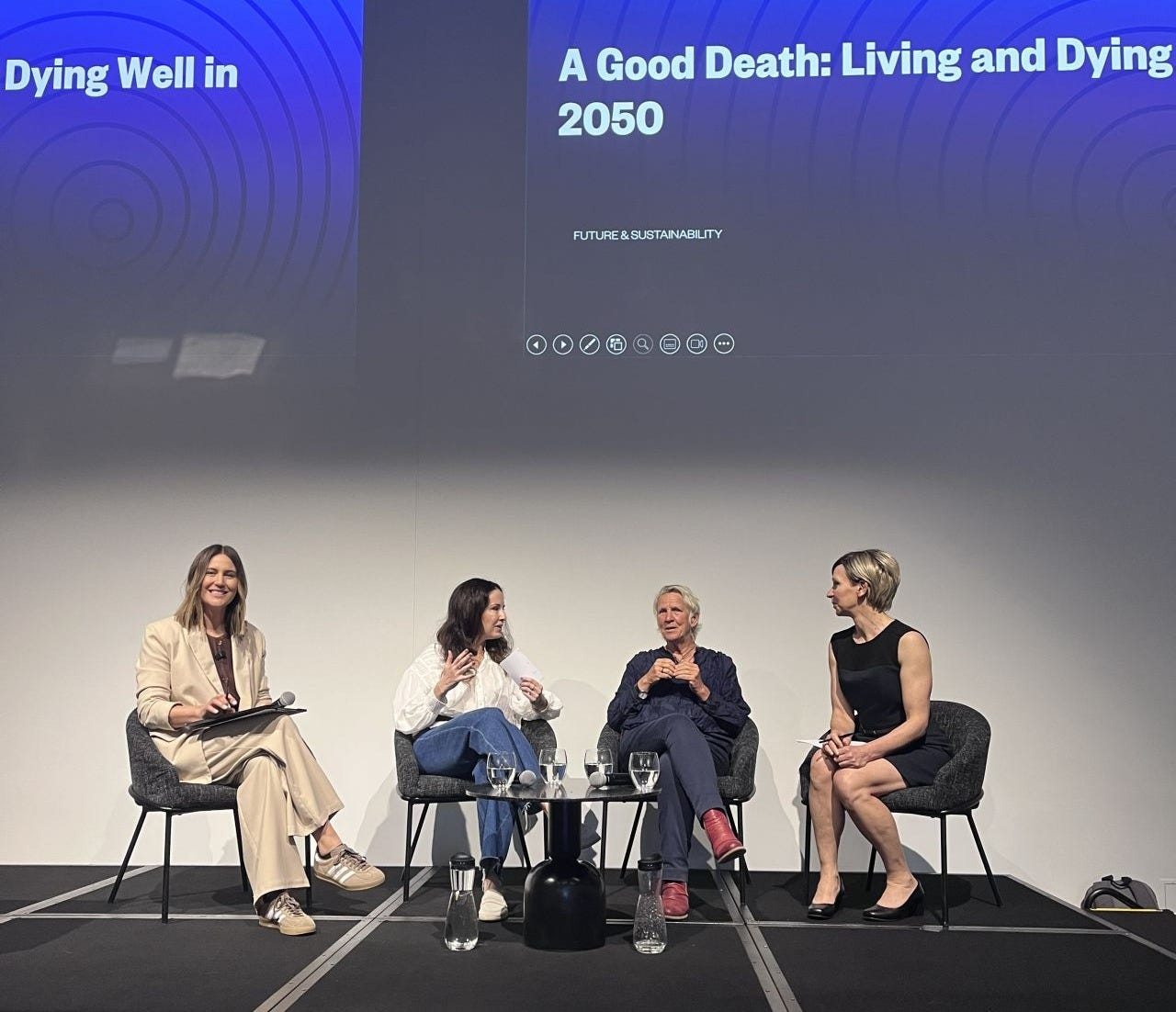
Last week I facilitated a panel on the future of dying with thought leaders from medicine, law and deathcare. And I couldn't wait to share the learnings with you.

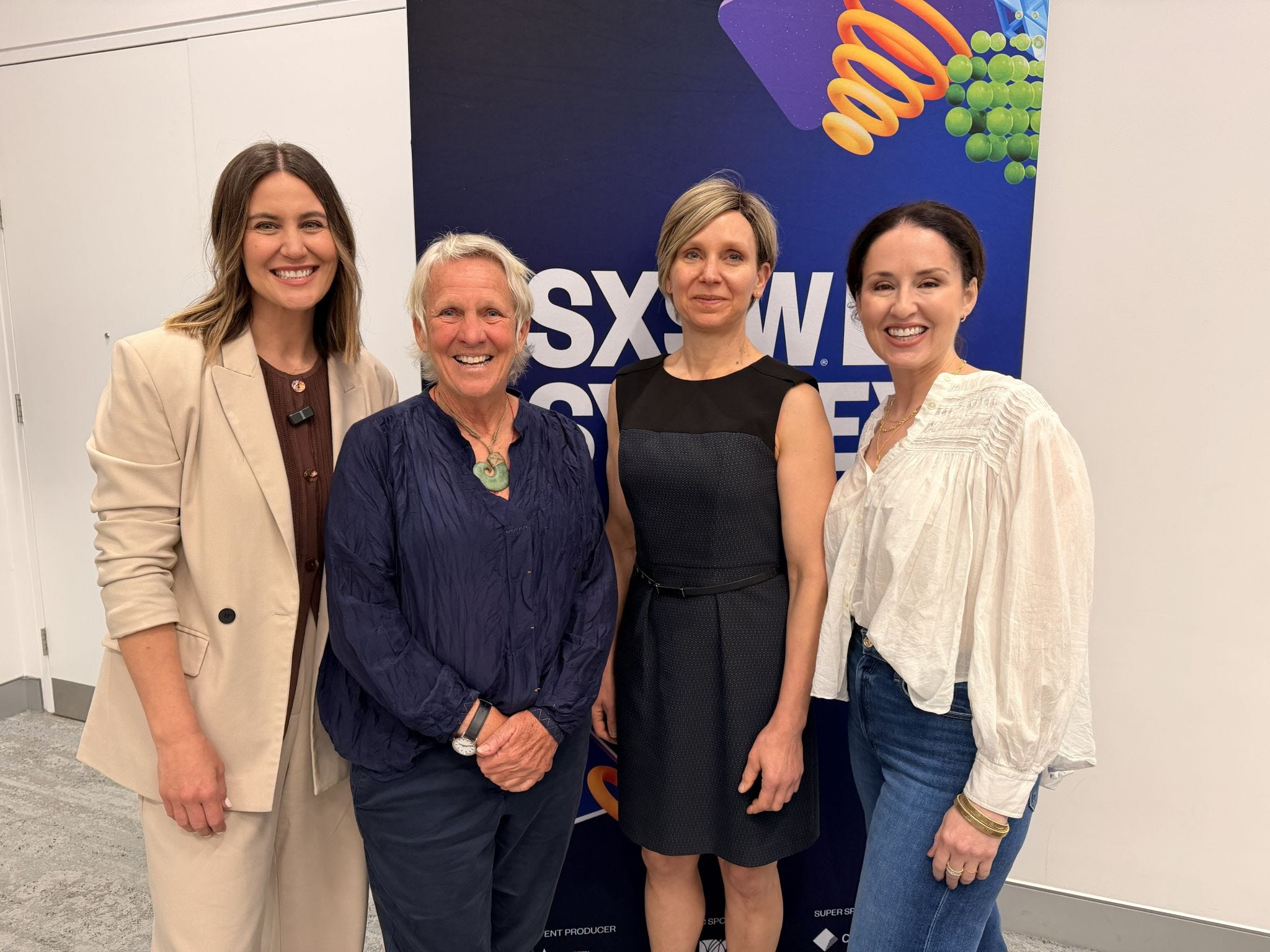
A year ago, I saw someone post about being at SXSW Sydney. It’s a week-long thought leadership ‘Olympics’, and I knew I had to be on that stage. So, together with three remarkable women — medical doctor Dr Shoshana Ungerleider, Professor of law Nola Ries, and Deathwalker Zenith Virago — last week I explored what A Good Death might look like in the future, and more importantly - today - on one of the biggest stages in the country. Here’s what we shared.
Why now?
Fast-forward to 2050.
I’ll be 66. How old will you be?
By then, the global population aged 60+ will have doubled, and the number of people 80+ — along with those living with dementia — will have tripled. Add in chronic illness, social isolation, and fewer younger people to deliver care, and we’re facing what can only be described as a slow-motion crisis.
And yet… there’s immense opportunity here. To design a system — and culture — that supports living and dying well.
Here are the headlines from our conversation
The key takeaways and lessons that might just change how you live.
1. A good death is possible — now and in the future.
Medically, legally, and spiritually, a “good death” is within reach. It asks us to lean in, talk about it, and set a place for death at the table for whenever it decides to show up.
2. Capacity isn’t binary.
Nola reminded us that capacity isn’t an “on/off” switch. Dignity and independence rely on enhancing choice throughout life — not waiting for a crisis.
It’s time to see decision-making as a continuum, not a cliff.
3. Care is a team sport — but dying is an inside job.
Zenith said it best: we’re all walking toward our own deaths, as well as those of the people we love. And dying is an inside job.
That makes us all, in some way, deathwalkers in our communities. The more informed and empowered we are, the better we’ll handle what’s coming.
4. Australia is leading the charge.
From death doulas to VAD legislation, Australia is quietly building a more compassionate, human-centred end-of-life movement — thanks in no small part to pioneers like Zenith. It’s something to be proud of — and to build on.
5. ‘Inheritance impatience’ is real — and growing.
With endless headlines about “the Bank of Mum and Dad”, Nola introduced us to a chilling concept: inheritance impatience — the expectation that wealth will be passed down soon (ideally now).
It’s a shift that has real legal and emotional consequences, and it shows just how entangled death and money can be.
6. Storytelling changes everything.
Shoshana’s work through End Well — and her collaboration with The Pitt TV show — proves that storytelling can shift our cultural relationship with death.
When we portray real dying (not the Hollywood version), we help people see that confronting mortality can deepen our experience of life.
7. Ceremony heals hard.
Zenith said a good ceremony can save you a lifetime of therapy.
When my dad Jack died, we honoured him exactly as he wanted — a party before the after-party (where we decorated his eco-friendly coffin with him there), and an after-party that featured us giving away all of his stuff, like a Dad-market.
It reminded me that funerals don’t have to be sombre or same-same. They can be real, joyful, personal — just like the person you’re saying goodbye to.
8. Voluntary Assisted Dying will continue to evolve.
VAD or MAID (Medical Aid in Dying as it’s known in the US) is already part of our landscape — and likely to broaden in inclusivity and understanding over the next few decades.
These are complex conversations, but necessary ones if we want autonomy to extend to our final moments.
So, what does this all mean?
It means that A Good Death isn’t some far-off concept — it’s something we can cultivate now, even if we’re hoping it doesn’t happen for many, many years.
By talking about death, documenting our wishes, and preparing our people, we can reclaim some control over one of life’s most universal, uncontrollable experiences.
Because at the end of the day, all any of us want is more time with the people we love — and peace in knowing we’re not leaving them with more heartbreak than necessary.
Curating and hosting this panel was a career-high moment — one that I know my dad would’ve been deeply proud of.
Thank you to SXSW Sydney for believing in this conversation, and to Zenith, Shoshana and Nola for your wisdom, warmth and courage.
Here’s to living — and dying — well in 2050 and beyond.
Want to go deeper?
Get my new book Next of Kin from all good bookstores or anywhere here.
Engage with Shoshana’s incredible End Well organisation here
Learn more about Zenith’s amazing work and Deathwalking courses here